The psychology of people who cut off contact with their families
At first, you tell yourself they are busy.
You send a text. No answer.
You call a few days later and leave a voicemail. Still nothing.
Then Thanksgiving comes, and the chair that used to belong to your son or daughter stays empty.
Christmas passes.
A birthday goes by with a short message—or no message at all.
And somewhere along the way, an uncomfortable question begins keeping you awake at night:
How did my own child become a stranger?
For many parents, few experiences are more confusing or painful than being cut off by an adult child.
There is no funeral. No clear ending. No place to put the grief.
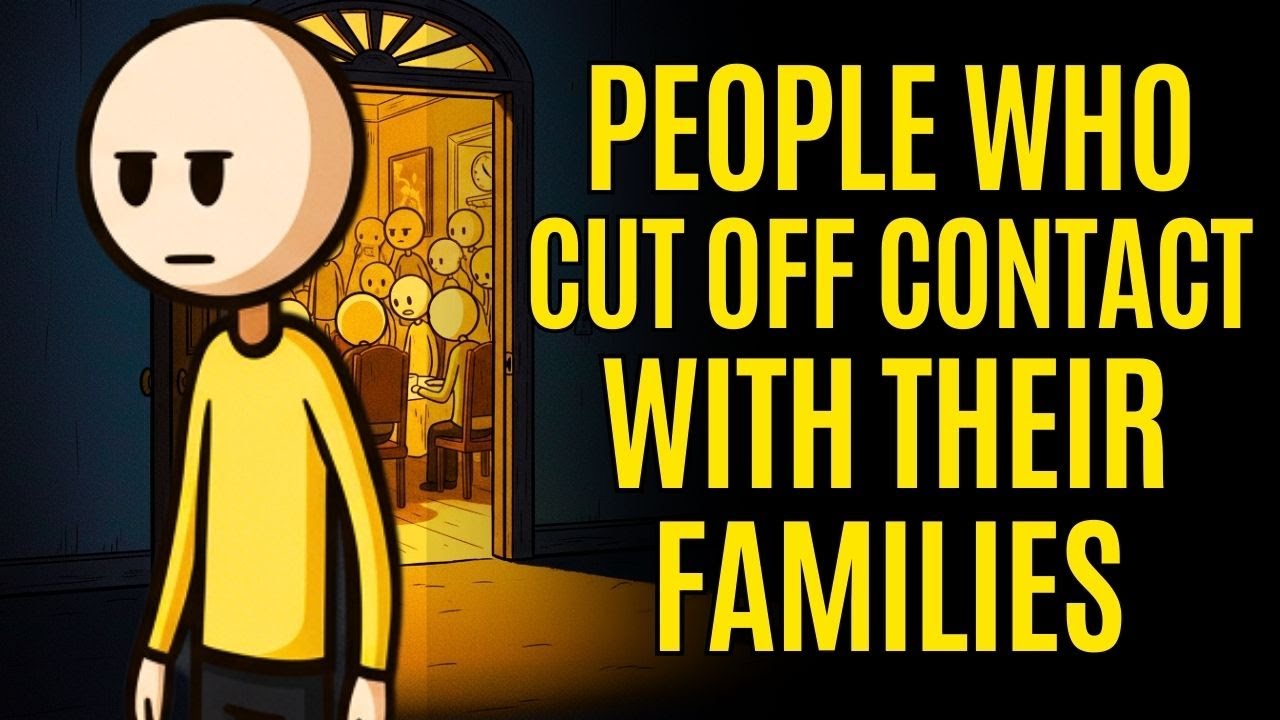
Your child is still alive. You may see photographs online. You may hear about them through relatives. You may even know that your grandchildren are growing up somewhere without you.
But you are no longer part of their everyday life.
And perhaps the hardest part is not knowing exactly why.
Family estrangement can happen for many different reasons, and there is rarely one explanation that fits every family.
Sometimes an adult child behaves unfairly.
Sometimes a parent caused more pain than they realized.
Sometimes both sides remember the same family history very differently.
And sometimes years of small disappointments eventually become something neither person knows how to repair.
Psychology offers one particularly important insight:
The final cutoff may happen suddenly. The emotional distance usually does not.
1. The Last Argument Is Often Not the Real Beginning
Parents frequently remember one event.
A terrible Thanksgiving.
An argument about a wedding.
A disagreement over a spouse.
A conversation about money.
A fight over grandchildren.
And then the calls stopped.
From the parent’s point of view, the reaction can seem completely out of proportion.
“We had one argument,” they think. “How could you erase your family over that?”
But the adult child may be experiencing something very different.
To them, the argument may not have been the beginning.
It may have been the final drop in a bucket that had been filling for years.
Perhaps they remember dozens of times they tried to explain how they felt and believed they were dismissed.
Perhaps they felt criticized whenever they made a major life decision.
Perhaps every family gathering left them tense for days afterward.
Perhaps they believed love always came with conditions they were expected to meet.
None of this automatically means their interpretation is completely accurate.
Human memory is imperfect. Families can experience the same moment differently.
But when estrangement happens, understanding those different realities becomes extremely important.
One side may remember:
“I was only giving advice.”
The other remembers:
“Nothing I did was ever good enough.”
One remembers:
“We teased everyone in the family.”
The other remembers:
“I learned to stay quiet because I knew I would be laughed at.”
One remembers:
“I sacrificed everything for my children.”
The other remembers:
“I was constantly reminded how much I owed my parents.”
The words may have been spoken only once.
The feeling they created may have lasted for years.
2. Adult Children Often Pull Away Before Parents Notice
Estrangement does not always begin with blocked phone numbers.
It can begin much more quietly.
The visits become shorter.
The conversations become safer and more superficial.
The adult child stops sharing important news.
They no longer ask for advice.
They avoid certain subjects.
They make excuses to leave family gatherings early.
They answer texts politely but reveal very little about their lives.
From the outside, everything may still look normal.
Inside the relationship, however, emotional distance may already be growing.
This is why some parents are genuinely shocked when contact ends.
They saw communication.
Their child felt disconnection.
There is an important difference.
A weekly phone call does not necessarily mean two people feel emotionally close.
A family can continue performing the rituals of closeness long after one person has stopped feeling safe, heard, respected, or understood.
Eventually, keeping up appearances may begin to feel more exhausting than leaving.
3. One of the Biggest Battles Is Often About Adulthood
A child can be 45 years old and still become 15 again the moment they walk into their parents’ house.
Old family roles have remarkable staying power.
The responsible daughter is still expected to fix everyone’s problems.
The successful son is still expected to impress the family.
The quiet child is still interrupted.
The “difficult” child is still blamed whenever conflict begins.
The family peacemaker is still expected to forgive first.
And the parent may not even realize it is happening.
They may simply be relating to their child in the way they always have.
But the adult child has changed.
They now have their own home.
Their own spouse.
Their own children.
Their own values.
Their own limits.
Problems often begin when a parent continues to view independence as rejection.
A daughter says:
“Please call before coming over.”
The parent hears:
“You’re not welcome anymore.”
A son says:
“We’re spending Christmas morning at home with the kids this year.”
The parent hears:
“Your new family matters more than us.”
An adult child says:
“I don’t want to discuss my marriage.”
The parent hears:
“You don’t trust me.”
But from the adult child’s perspective, these may not be acts of rejection at all.
They may be attempts to establish ordinary adult boundaries.
The conflict becomes dangerous when every boundary is interpreted as disrespect.
4. Some Adult Children Become Tired of Playing the Same Family Role
In many families, children unconsciously receive roles when they are young.
One becomes “the successful one.”
Another becomes “the sensitive one.”
Another is “the troublemaker.”
One child is expected to make everyone proud.
Another is expected to absorb everyone’s frustration.
One becomes invisible because staying unnoticed feels easier than becoming a target.
Another becomes the emotional caretaker of the family.
They calm arguments.
They listen to a lonely parent.
They solve problems.
They keep everyone connected.
This may continue for decades.
Then something changes.
The adult child goes to therapy.
They marry someone who notices the pattern.
They become a parent themselves.
They experience illness, divorce, grief, or burnout.
And suddenly they begin asking a question they may never have allowed themselves to ask:
“Why am I responsible for keeping everyone else comfortable?”
That question can transform a family.
Sometimes it leads to healthier relationships.
Sometimes it creates enormous conflict.
Because when one person stops playing their old role, everyone else must adjust.
Not every family knows how.
5. Grandchildren Can Turn Small Conflicts Into Major Ones
For older parents, this may be one of the most painful parts of estrangement.
Losing contact with an adult child is devastating enough.
Losing contact with grandchildren can feel unbearable.
Unfortunately, the arrival of grandchildren can also bring old family conflicts to the surface.
Suddenly there are disagreements about discipline.
Food.
Religion.
Bedtimes.
Screen time.
Holidays.
Visits.
Advice.
Privacy.
A grandmother may believe:
“I raised three children. I know what I’m doing.”
Her daughter may hear:
“You don’t trust me to raise my own child.”
A grandfather may think:
“I was only joking.”
His son may think:
“I already told you not to say that in front of my kids.”
The older generation may feel excluded.
The younger generation may feel undermined.
And because grandchildren are involved, both sides become more protective.
Small disagreements can quickly become battles over respect, authority, and loyalty.
6. “I Don’t Know What I Did” Can Mean Several Different Things
This sentence deserves compassion.
Many estranged parents truly do not understand what happened.
Some were never given a clear explanation.
Some received only a short message.
Some are dealing with an adult child whose behavior is unpredictable, manipulative, or influenced by another person.
Estrangement is not automatically proof that the parent did something terrible.
But there is another possibility worth considering.
Sometimes “I don’t know what I did” actually means:
“I don’t remember those events the way my child remembers them.”
That distinction matters.
Imagine a daughter saying:
“You always criticized my weight.”
Her mother may honestly respond:
“I never criticized you. I was worried about your health.”
Both statements can feel completely true to the people saying them.
The mother remembers concern.
The daughter remembers shame.
Repair becomes almost impossible when the conversation turns into a courtroom where only one memory is allowed to exist.
Sometimes the more useful response is not:
“That never happened.”
It is:
“I remember it differently, but I want to understand what it felt like for you.”
That single shift can change an entire conversation.
7. Cutting Contact Is Usually Emotionally Complicated for the Person Who Leaves Too
It can be tempting to imagine that the child who stopped calling simply moved on.
Often, the emotional reality is more complicated.
People can experience relief and grief at the same time.
They may miss their mother while believing they cannot speak to her.
They may love their father while dreading every interaction.
They may look at family photographs and wonder whether they made the right decision.
They may feel peaceful for months, then become overwhelmed with guilt on Mother’s Day, Father’s Day, Thanksgiving, or Christmas.
Estrangement creates an unusual kind of grief.
The person you miss is still alive.
There is no funeral.
No socially recognized mourning period.
No simple explanation you can give other people.
Parents experience this grief.
Adult children can experience it too.
That is one reason family estrangement can last much longer than outsiders expect.
People may want connection while simultaneously fearing what will happen if connection returns.
8. No Contact Is Not Always the First Boundary
Before completely ending a relationship, some people try smaller forms of distance.
They stop discussing certain subjects.
They visit less frequently.
They communicate mostly by text.
They stay in hotels instead of sleeping at the family home.
They limit holiday visits.
They ask their parents not to criticize their partner.
They refuse to participate in arguments.
Sometimes these changes are enough.
Sometimes the family adjusts and eventually becomes healthier.
But when boundaries repeatedly lead to more conflict—anger, guilt, pressure, insults, threats, or relentless attempts to regain control—the person setting the boundary may decide that distance is easier than constant negotiation.
Again, that decision is not automatically wise or fair in every family.
But understanding the process helps explain why some cutoffs that appear “sudden” from one side feel like a final step from the other.
9. There Is One Question Parents Often Want Answered Most
After the anger comes the question:
“Can we ever have a relationship again?”
Sometimes, yes.
Estrangement does not always last forever.
But reconciliation usually becomes harder when the goal is proving who was right.
Consider the difference between these two messages:
“You’ve hurt this family enough. I don’t know what we ever did to deserve this.”
And:
“I miss you. I know we may remember things differently, but if there are ways I hurt you that I didn’t understand at the time, I’m willing to listen.”
The first message demands a verdict.
The second opens a door.
Opening that door does not require agreeing with every accusation.
It does not require accepting disrespect.
And it does not mean parents must take responsibility for things they genuinely did not do.
It simply communicates something many estranged adult children say they wanted long before the relationship collapsed:
“I want to understand your experience, even if it is different from mine.”
10. What Usually Makes Reconnection Harder
When someone has already stepped away, certain reactions tend to increase tension.
Repeatedly calling.
Sending angry messages.
Using siblings as messengers.
Showing up unexpectedly.
Demanding access to grandchildren.
Posting family disputes on social media.
Recruiting relatives to take sides.
Reminding an adult child of everything the parent sacrificed.
Trying to make them feel guilty for upsetting an elderly parent.
These actions often come from panic rather than cruelty.
A parent feels the relationship slipping away and instinctively grabs harder.
But the harder they grab, the more trapped the other person may feel.
Sometimes the first step toward rebuilding contact is creating enough emotional space for both sides to stop defending themselves.
11. What Parents Can Do Instead
If you are dealing with estrangement, you do not have to spend the rest of your life blaming yourself.
But you also do not have to spend it waiting for the other person to change.
There are things you can examine honestly.
Ask yourself:
When my child tried to disagree with me, did I listen—or immediately defend myself?
Did I respect their spouse, even when I disliked their choices?
Did I treat boundaries as rejection?
Did I frequently use guilt to keep the family together?
Were apologies followed by changed behavior?
Did I expect my adult child to keep making me emotionally comfortable?
Did I criticize more often than I encouraged?
And perhaps the hardest question:
Is there anything my child has told me repeatedly that I dismissed because I didn’t agree with it?
These questions are not accusations.
They are opportunities.
Because even if reconciliation never happens, understanding your own patterns can prevent the pain from consuming the rest of your life.
12. Adult Children Also Have Responsibilities
Family estrangement should not be discussed as though parents are always wrong and adult children are always right.
That is simply not true.
Adult children can be cruel.
They can manipulate.
They can punish.
They can refuse reasonable conversations.
They can rewrite family history in ways that hurt everyone around them.
They can use access to grandchildren as leverage.
They can avoid responsibility for their own behavior.
Healthy boundaries are not the same thing as cruelty.
And protecting yourself does not require humiliating another person.
A more honest understanding of family estrangement leaves room for uncomfortable truths on both sides.
Sometimes the healthiest action is distance.
Sometimes it is accountability.
Sometimes it is forgiveness.
Sometimes it is accepting that two people may love each other but still be unable to have the relationship either one hoped for.
The Most Painful Truth May Also Be the Most Useful One
When your own child stops calling, it can feel as though decades of love have been erased.
They haven’t been.
The birthday cakes existed.
The school mornings existed.
The Christmas mornings existed.
The rides home existed.
The sacrifices existed.
The laughter existed.
So did the mistakes.
Family relationships contain all of it.
And estrangement rarely means the entire past was false.
It usually means the present relationship became painful enough that someone believed distance was the only answer they had left.
Whether that belief was completely justified is another question.
But understanding it is often more useful than fighting it.
Sometimes reconciliation begins with one sincere conversation.
Sometimes it takes years.
Sometimes it never happens.
But there is a profound difference between spending those years asking:
“How could they do this to me?”
and eventually becoming able to ask:
“What happened between us that made distance feel necessary?”
That question does not automatically assign blame.
It does something more important.
It creates the possibility of understanding.
And in families where there is still love underneath the anger, understanding may be the first small bridge back.